Diagnosis
How is COPD diagnosed
To diagnose COPD, your doctor will examine your symptoms, your medical history and perform a few additional tests. These will help you understand how your lungs work, and rule out other possible causes of your symptoms.
1 Functional respiratory examination (EFR) — Spirometry
You'll be asked to blow into a special device. This measures how much air you can breathe out, and how fast. It indicates whether your airways are narrowed, and can confirm the presence of COPD.
The test is simple, non-invasive and takes just a few minutes.
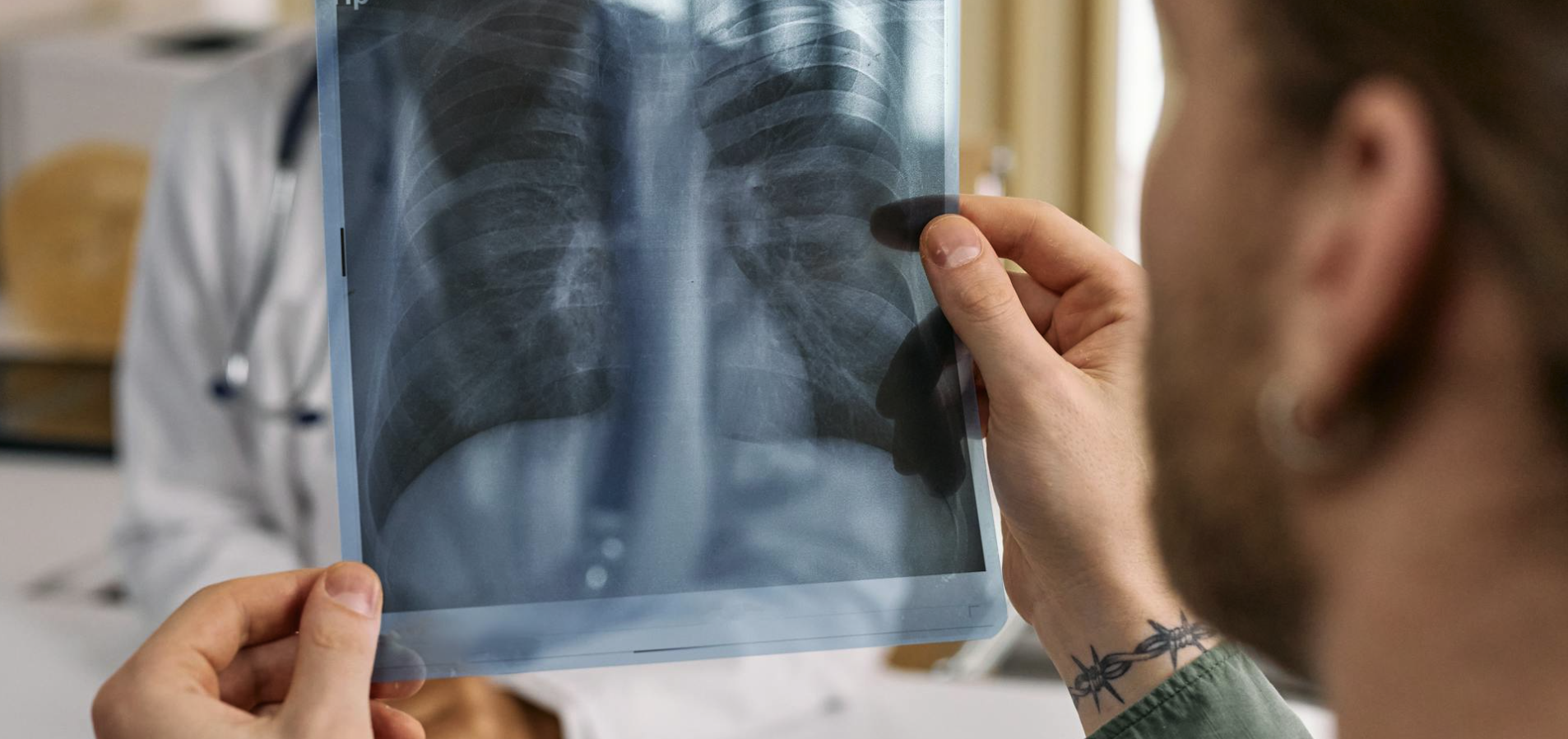
2 Chest X-ray or CT scan
These images allow us to examine the structure of your lungs.
An X-ray can reveal signs of lung damage or other problems such as infection. A CT scan gives a more detailed picture and may show, for example, emphysema, a common form of COPD.
3 Blood analysis
This analysis can be performed to check your oxygen levels, rule out other diseases such as anemia, or detect infections.
4 Measurement of oxygen in the blood (saturation or arterial blood gas)
A small sensor on the finger (saturometer) will measure oxygen levels in the blood.
Sometimes, a small amount of blood is also taken from the wrist (arterial blood gas) to obtain more detailed information on oxygen and carbon dioxide levels.
All these tests enable a precise diagnosis to be made in order to assess the severity of lung damage, and to guide appropriate therapeutic management.
